<?xml version="1.0" encoding="utf-8"?><feed xmlns="http://www.w3.org/2005/Atom" ><generator uri="https://jekyllrb.com/" version="3.10.0">Jekyll</generator><link href="https://dariogentiletti.com/feed.xml" rel="self" type="application/atom+xml" /><link href="https://dariogentiletti.com/" rel="alternate" type="text/html" /><updated>2026-07-05T14:03:40+00:00</updated><id>https://dariogentiletti.com/feed.xml</id><title type="html">Non-Cooperative Infinitely Repeated Games</title><entry><title type="html">Kleiner Perkins 2021 Product Fellowship — Bitesnap, Photo Food Journal</title><link href="https://dariogentiletti.com/posts/KP-Product-Challenge" rel="alternate" type="text/html" title="Kleiner Perkins 2021 Product Fellowship — Bitesnap, Photo Food Journal" /><published>2020-10-10T00:00:00+00:00</published><updated>2020-10-10T00:00:00+00:00</updated><id>https://dariogentiletti.com/posts/KP-Product-Challenge</id><content type="html" xml:base="https://dariogentiletti.com/posts/KP-Product-Challenge"><![CDATA[<p>When I finally graduated in April 2020, like every other student I had to take the graduation pictures. Meanwhile, the COVID-19 pandemic was rising in New York and it was definitely not easy to find a photographer during such times. However, something even more difficult was to look at those pictures the day after. Transferring from a community college to an Ivy League and wanting to graduate just in 2 years while being a startup founder, I spent most of my time sitting in a library, without any physical exercise, and with unhealthy food habits. When I looked at those pictures, I finally became aware of the 23 pounds that I gained over the last two years. Before transferring to Columbia, I was playing college football and probably I was at the peak of my shape. Now, it was the opposite and I had to take my body back.</p>

<p>Having been an athlete for most of my life, I had a lot of knowledge about nutrition. I was not going to follow any specific diet, but just eating fewer calories than the ones I burned. After I calculated my TDEE[[Total Daily Energy Expenditure::lsn]], I know I just had to eat less than 1300 calories to lose weight. You do not need any other special or trendy technique.  <a href="https://physiqonomics.com/eating-too-much/" title="Physiqonomics' Article about Tracking Calories">It is so simple, but where many people fail is to accurately track calories.</a></p>

<p>For the first month of my diet, I was using traditional fitness apps: MyFitnessPal and LoseIt. However, I quickly noticed that there was much unreliable information about the calories of the food I was eating. Without accurate tracking, my plan was going to fail: I needed to find a more reliable tool. I started to try every possible fitness and calorie tracking app. One day, while reading Hacker News, I found an article about "Deep Learning Meets Food Logging". At that moment I discovered Bitesnap, but I never imagined that would be the most useful app that will lead me to lose 25 pounds in 2 months.</p>

<hr />

<h2 id="table-of-contents">Table of Contents</h2>

<ul>
  <li>[[What is Bitesnap?::#what]]</li>
  <li>[[Why am I obsessed with Bitesnap?::#why]]</li>
  <li>[[What can be improved?::#improvements]]</li>
  <li>[[Conclusion::#conclusion]]</li>
</ul>

<hr />

<h2 id="what">What is Bitesnap?</h2>

<p><img src="/assets/img/kp-challenge/logo-with-text.png" alt="Logo" /></p>

<p>Bitesnap is a mobile app that uses deep learning to recognize food in your pictures and automatically calculate calories and nutrients.</p>

<p>There are three main features that Bitesnap offers to its users:</p>
<ol>
  <li>
    <p><strong>Logging a meal by just taking a picture</strong> — When taking a picture of the food through the app, it suggests you on what you are eating and automatically find all the calories and nutrients of that food — the process does not take more than 10 seconds.</p>
  </li>
  <li><strong>Explore eating patterns visually</strong> — There are two visual ways that Bitesnap shows eating patterns to the users. The first is through the photo journal, which a user can visualize by scrolling the homepage and seeing all the meals they had in the past days. The second is through the data charts available in the menu, where a user can look not only at the calories they had in the past days, but also at the amount of protein, fiber, vitamin D, and every other possible nutrient.
a</li>
  <li><strong>Personalized Predictions</strong> — Bitesnap uses machine learning to customize itself for each user. This means that the app visually learns the user's habits over time, and it is able to provide predictions on what the user is eating. In fact, the more the user uses the app, the better the algorithms become at identifying the food in the pictures.</li>
</ol>

<hr />

<h2 id="why">Why am I obsessed with Bitesnap?</h2>

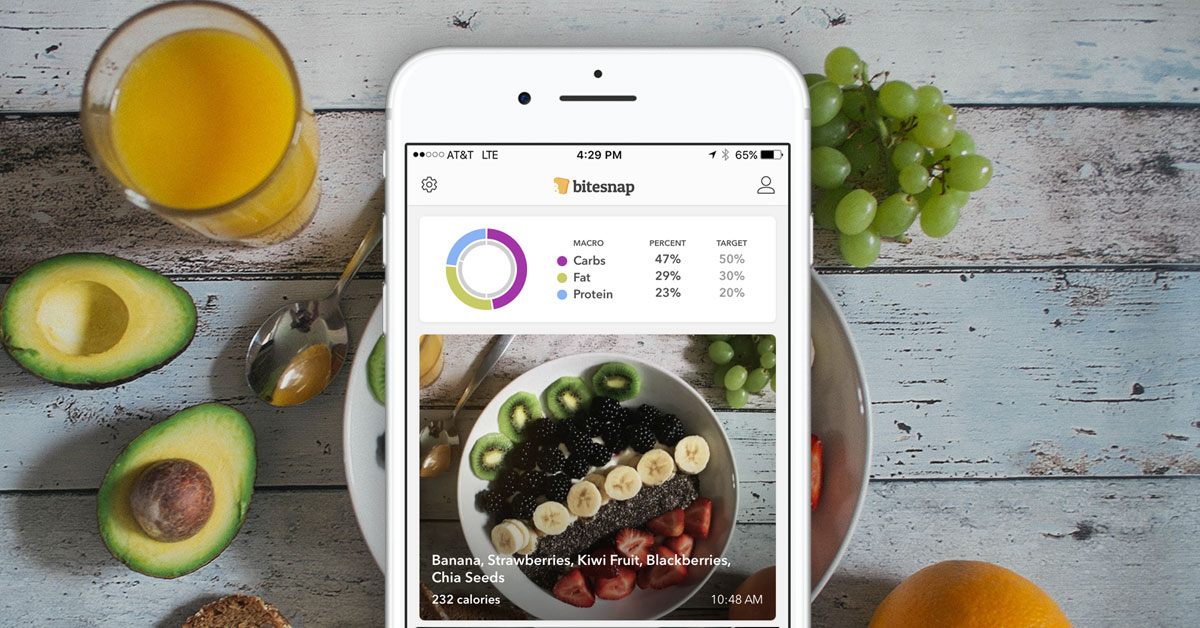
<p><img src="/assets/img/kp-challenge/bitesnap-og-image.jpg" alt="Bitesnap uses deep learning to recognize the food in the picture" /></p>

<p>I have been using MyFitnessPal for over 3 years. After, I switched to LoseIt for 2 years. However, it took me one day of using Bitesnap to make me switch to this app without absolutely any single doubt. At the time I'm writing this article, I have lost 25 pounds in two months. While my motivation and discipline played an important role, I would have not been successful with my strategy if it was not for Bitesnap. I identified two main reasons why, out of thousands of calorie-tracking apps that have hundreds of employees and years of development, I stuck with Bitesnap, built by just two people a few years ago.</p>

<h4 id="it-does-the-most-important-thing-and-it-does-it-seamlessly">It does the most important thing, and it does it seamlessly.</h4>

<p><img src="/assets/img/kp-challenge/screenshots.jpg" alt="Most used features of MyFitnessPal through user interviews, by uxdesign.cc" /></p>

<p>When I found MyFitnessPal, I just wanted to track my calories. I downloaded it because it was the most popular one. However, every time I was opening the app I had to go through the "Blog", the "Water Log", the "Exercises" and much more. I had to click a few buttons and spend more time than I wanted just to add what I ate that day and how many calories I still have left. The second most important thing for me was to track the number of carbs because I did not want to eat more than 35% of carbs during a day. It was so hard to find how to visualize my macro, that for the first months I believed MyFitnessPal did not have such a feature.</p>

<p>After a long pause, I started a ketogenic diet and I needed to track my food again. This time, I was done with MyFitnessPal's User Experience, and I wanted something simpler, that would not steal more than five minutes of my day. I found LoseIt, which had a much quicker experience to add new food. With just two clicks, I was able to add what I ate directly from the homepage. There were other features such as exercise and waterlog, but they were hidden or not on the homepage. However, the business model of LoseIt was terrible for me: to look at some data, you needed to buy the subscription. The worst thing is that one of the data restricted for the premium users was the macronutrients! I was unable to see how many carbs, proteins, and fat I was eating each day, and that was a huge limit, especially when doing a ketogenic diet [[A ketogenic diet consists of reducing the amount of carbohydrate intake to less than 50 grams a day.::rsn]]. As with MyFitnessPal, I struggled to be consistent and I found myself forgetting to use the app over and over again.</p>

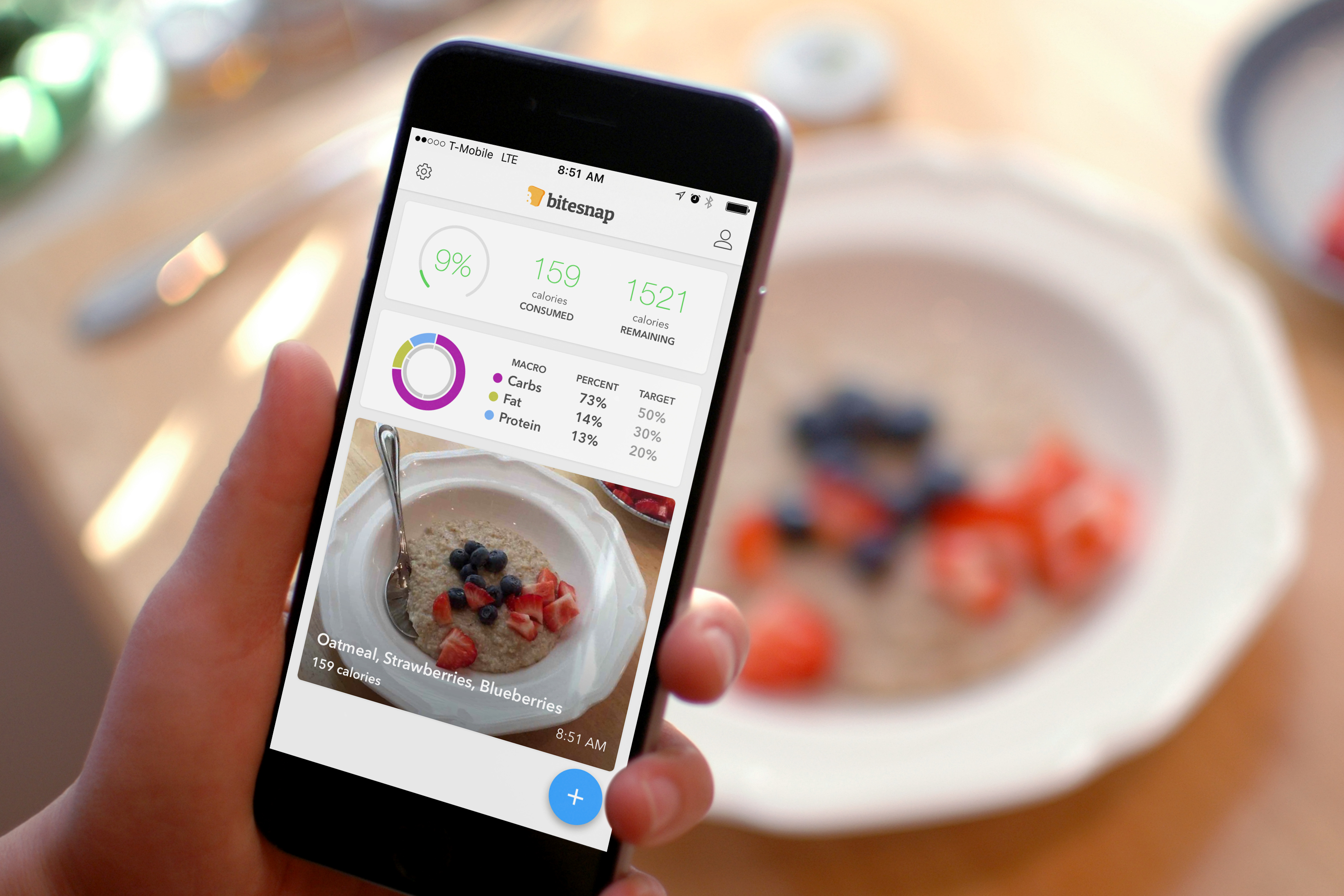
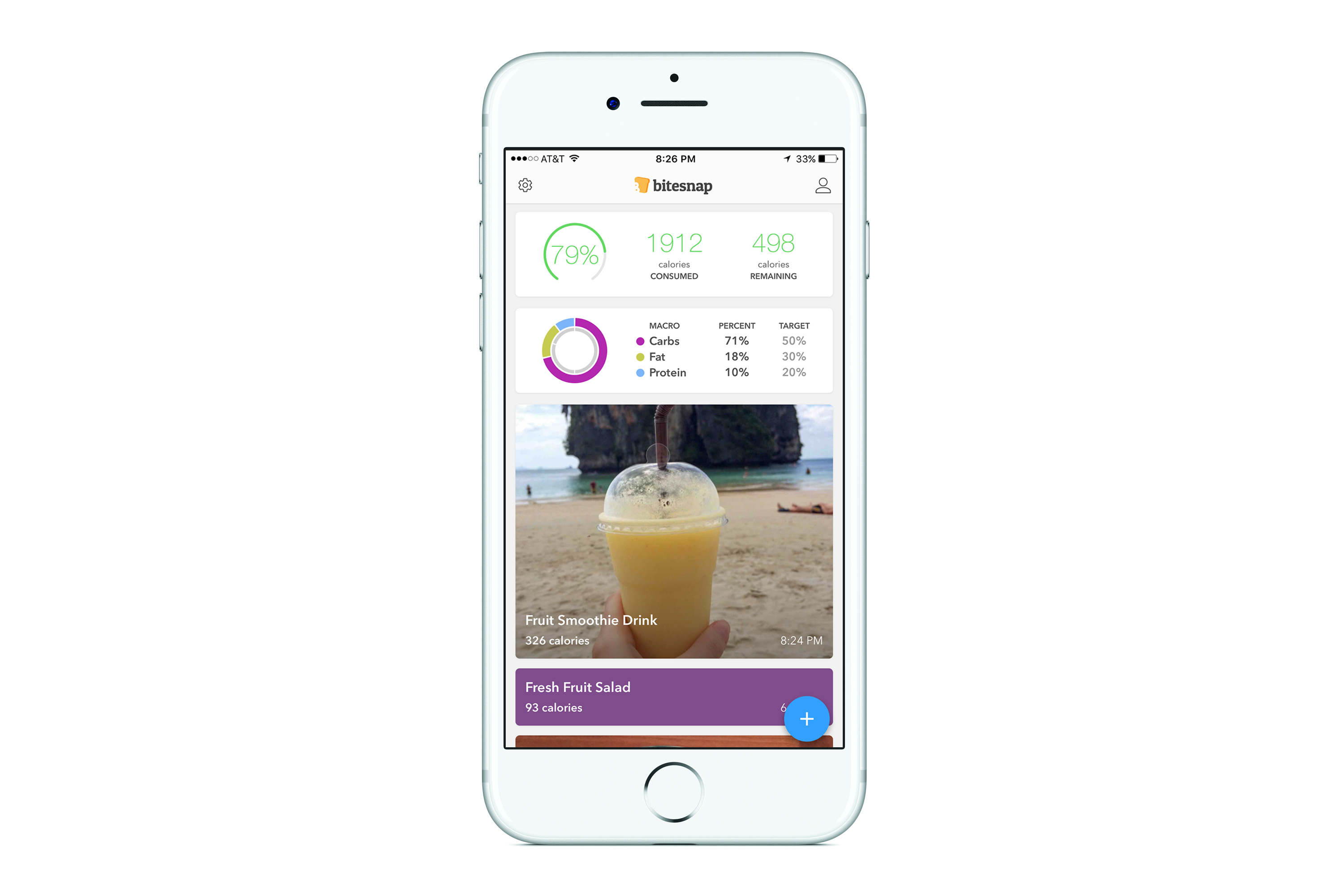
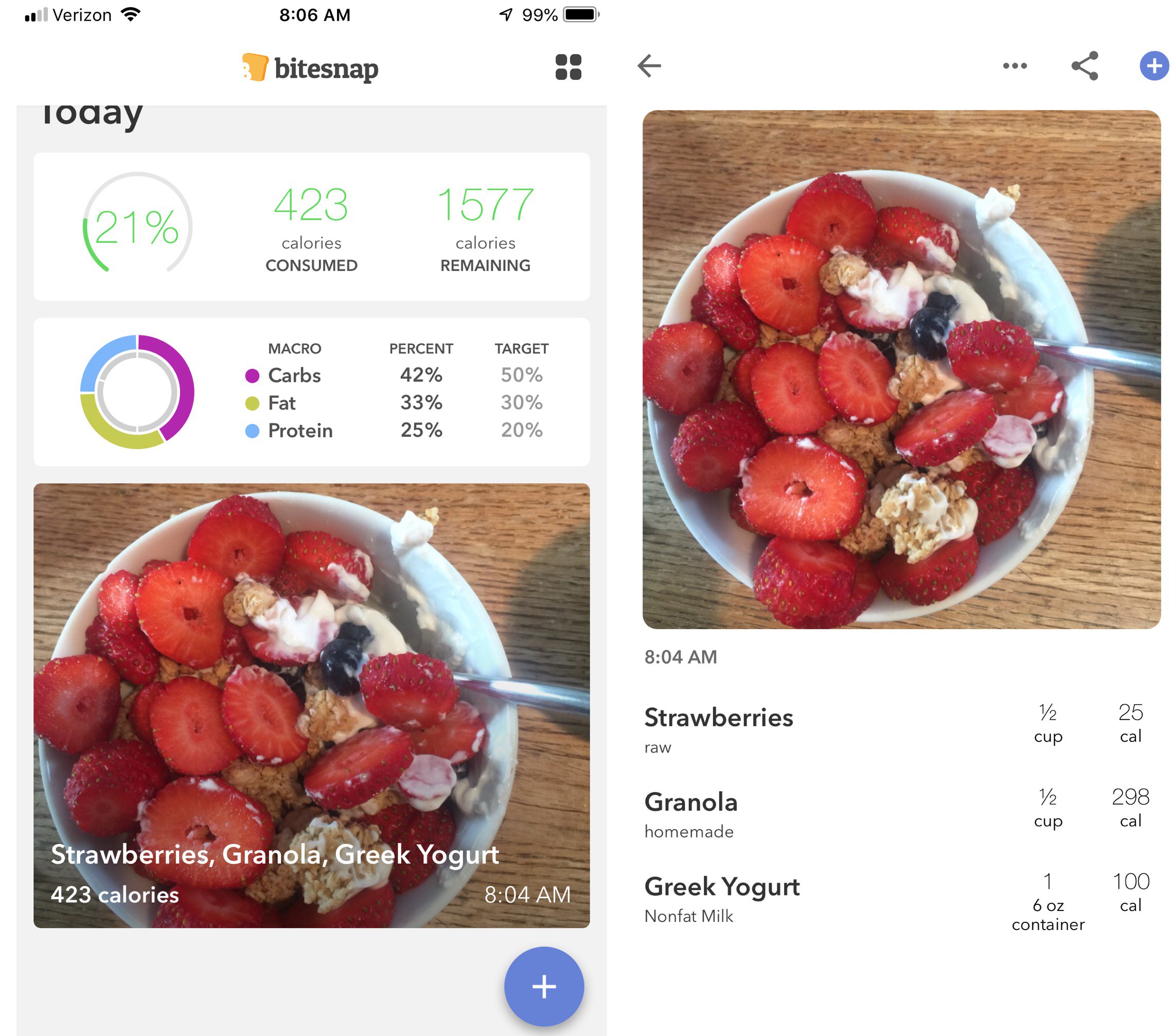
<p>When I downloaded Bitesnap, I was amazed by how everything I needed was right there where I wanted it: the first two things that appear on the main screen are calories and macronutrients. It is a simple and intuitive UI that gives me all the information I want in the quickest way possible. An important thing to consider for calories tracking app is that users want to use them as less as possible: tracking calories can already be a time-consuming activity, and users need a quick and seamless experience just to find out how much left they have to eat; they do not want to spend even more time just add a food item on an app, or go through dozens of features they are never going to use it.</p>

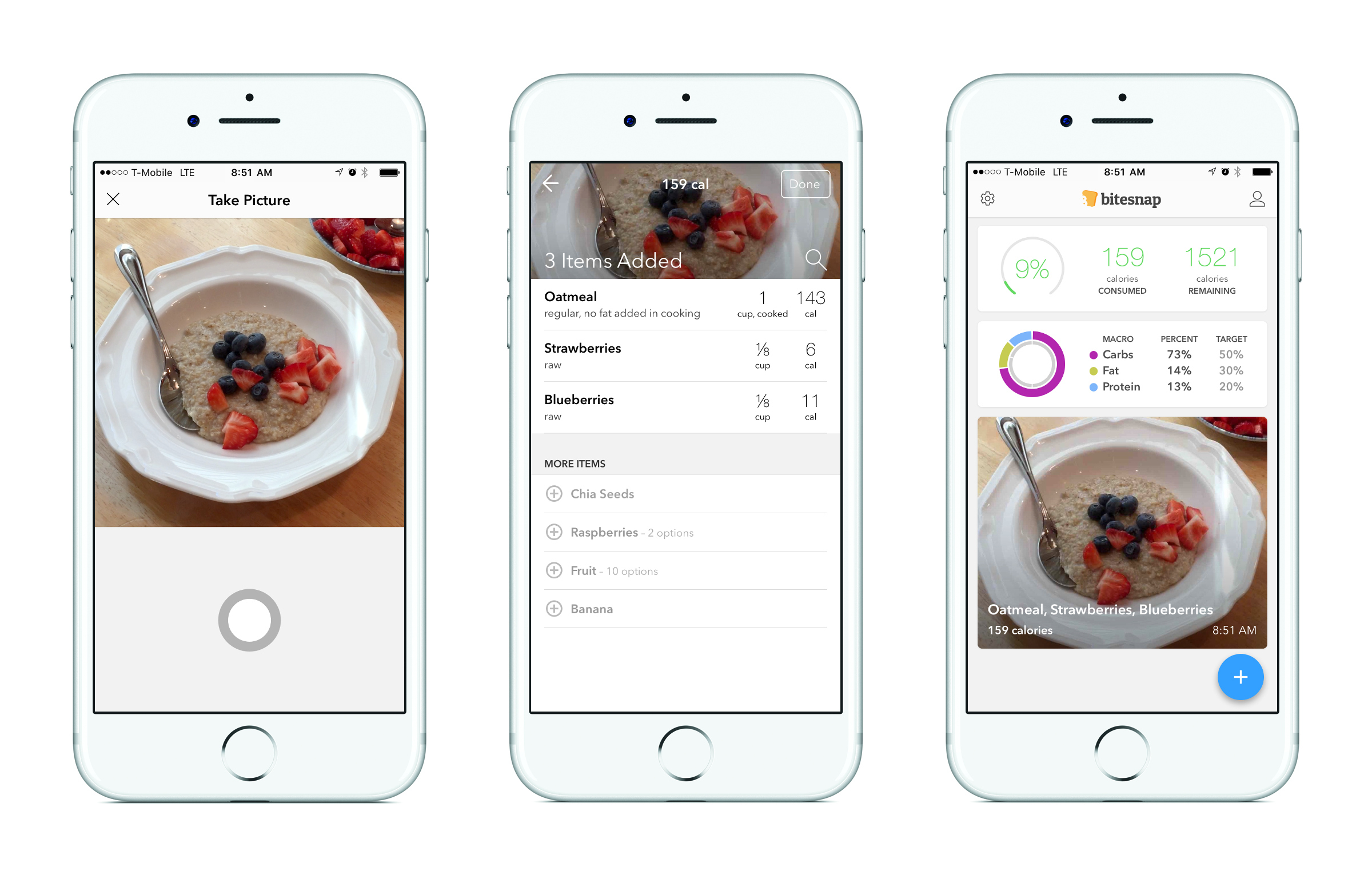
<p>With Bitensap, I open the app, click on the camera, take a picture of the food, and confirm. I was a skeptic on the deep learning, but in two months I only had one or two meals not recognized. Surprisingly, it was able to recognize the meals even under poor light conditions or slightly blurry pictures. I was looking for a tool to track calories, and Bitesnap does it, most quickly and seamlessly.</p>

<h4 id="i-can-trust-its-accuracy">I can trust its accuracy.</h4>

<p><img src="/assets/img/kp-challenge/product-2.jpg" alt="In the homepage you can keep track of your calories and macronutrients" /></p>

<p>Back when I was tracking my calories with MyFitnessPal or LoseIt, I was always double-checking the calories that the app was telling me with some reliable source online. This is because both apps use a crowdsourced database, where everyone can create a meal with its information and add it to the database. Therefore, when I am adding a food item, it is possible that I'm using one added by another person, and that's not always reliable. For this reason, I had to double-check online (and therefore wasting more time), and I was always adding ~100 calories to my total at the end of the day, to capture any miscalculation and underestimation.</p>

<p>Bitesnap does not use crowdsourcing: instead, it only retrieves food nutritional facts from official databases, such as the governmental USDA FoodData Central. When I take a picture of the food and the app understands which one is it, I just need to confirm its quantity. I do not need to double-check or adjust the nutritional facts. At the end of the day, I'm completely confident of how many calories I ate [[And, as we have seen in the article linked in the introduction, this is one of the most common mistakes people do when tracking calories.::rsn]], and what are my macronutrients percentages.</p>

<p>While the lack of crowdsourcing can be perceived as a limiting factor, I would say that it has been the main reason why I stuck with Bitesnap. Crowdsourcing helps to have every information about every single item, while official databases have information only about the most common food. They do not have the nutritional facts about some south Asian traditional dish or northern Italian home-made recipe, but if you use crowdsourcing, someone will be adding them. However, that was not what I needed: I needed a reliable source of information. When Bitesnap does not have a specific food item (it did not happen more than eight items in the last two months), I can easily create a new one, manually adding the nutritional facts. That item is not shared with other people, so that when you search you can only find food information from the official databases or the ones you created. Most importantly, official databases provide additional facts such as vitamins, minerals, caffeine, etc. This is a gamechanger because until now I was only able to track calories.; however, I had no idea about the vitamins that I was lacking or the amount of caffeine drunk each day. That is because when you use crowdsourcing, people do not insert that information when adding a new item. With Bitesnap, I can look at the number of vitamins I'm eating each day, I can instantly see any lack through data charts, and I can set daily targets for those more specific nutritional facts. Being all retrieved from the official governmental database, I feel confident about its accuracy.</p>

<hr id="improvements" />
<h2 id="what-can-be-improved">What can be improved?</h2>

<p><img src="/assets/img/kp-challenge/screenshot-feed.jpg" alt="Bitesnap's UI when adding a food item" /></p>

<h4 id="crowdsourced-barcode">Crowdsourced Barcode</h4>
<p>While it has been inserted in the most recent update, the feature of scanning the barcode does not work consistently with many items. One should not use deep learning for packaged food: it is not only stupid, but it can also return the wrong predictions. While it is important to not have a crowdsourced database for general food items, it is different for the items that have been scanned through barcodes. In fact, it can be useful to have a shared database with such items, where the nutritional facts are not manually inserted by the user but retrieved by official sources. Instead of adding all the products manually, users will add them when scanning through with the barcode: in this way, if now I'm eating a Snickers, I can just search it and find it if someone else already scanned its barcode. Scanning barcode is not a funny experience after the first time, so it is important that Bitesnap does not stress the user requiring him to scan every time an item that has already been previously scanned by other users.</p>

<h4 id="additional-serving-sizes">Additional Serving Sizes</h4>
<p>One of the only things that deep learning cannot accurately predict [[For now.::rsn]] is the quantity of the food. There are way too many difficulties to understand how much of an item is present on a picture, so you often have to set it yourself. Bitesnap does a good job with predictions so that most of the time it already suggests you the right size. However, the serving sizes are often limited to a metric that users cannot be familiar with. In my example, as a European, I have no idea how much one ounce is. While I understand that these measurements are probably obtained directly from the official databases, they can be easily converted into other measurements. This is critical if the app wants to expand to other states or nations, where people are used to measuring food with different scales or countries use a completely different metric system.</p>

<h4 id="goal-oriented-ux">Goal-Oriented UX</h4>
<p>I would assume that a significant percentage of users who are active on a calorie tracking app have goals and objectives they want to achieve in terms of nutrition. Whatever this is losing weight, gaining muscle, or eating more healthy. The app is tackling this need in two ways: the <em>challenges</em> and the <em>nutrition goals</em> features. However, both of them are underwhelming and have a lot of room for improvement.
The <em>challenges</em> feature offers only one challenge that consists of tracking your meal seven days in a row. Even after you completed it, the challenge does not get more difficult, and you can only repeat the same one.
The <em>nutrition goals</em> let you set what is the amount of quantity you want to get each day for each nutrient: proteins, carbs, but also riboflavin, vitamin C, and everything else you can think of. While this sounded amazing for me when I was trying to track my Vitamin B12 intake, I found myself never looking at the feature anymore. To look at the nutrients you are eating every day, you need to navigate to a slightly hidden menu, find the data charts of all the nutrients, and see much you are getting every day for each of them. I do not receive any notification about my intake, and I need to spend a lot of time during the day to understand what I'm missing, but also to find online the food that can provide me with what I'm lacking.
The improvement of both features can be extremely helpful to help users achieve their objectives. The <em>challenges</em> and <em>nutrition goals</em> features can be combined in the same one, which consists of weekly goals that you can set for yourself. In this way, they would be meaningful ones that the user cares about and is trying to accomplish. These challenges can be calories intake, the limit of sugar consumption, caffeine threshold, and much more. The app can also use the data of the user to suggest during the day what food he can eat to reach his goal. For example, if a user often ate salmon the previous week and today he is far from his protein intake goal, the app can send a notification before dinner, suggesting that he could eat two fillets of salmon to get 30 grams of proteins and reach his goal.</p>

<hr />

<h2 id="conclusion">Conclusion</h2>
<p><img src="/assets/img/kp-challenge/finalpic2.jpeg" alt="Main menu of Bitesnap" /></p>

<p>Bitesnap has been the most accurate and user-friendly calorie tracking app I used. It helped me a lot to track my calorie intake in the last two months where I lost 25 pounds. Most importantly, I did not spend more than 3 minutes a day to track the food. This is exactly what I was looking for. It is obvious how Bitesnap has been customer-obsessed during their development: the UI is extremely intuitive and all the numbers are where you expect them to be; also, there aren't any features you probably are not going to use. Because I am not active on Instagram and I rarely post pictures on Facebook, at first I thought I would never use the photo journaling feature of the app. Instead, after a few weeks, I found myself looking at what I ate days ago and wandering through the beautiful memories I had that day. I realized how powerful it is food when remembering experiences and moments. However, while some other features have a lot of potentials, they seem underdeveloped and hidden from the user's experience: as a calorie tracking app, it is critical to support and help the user's nutrition objectives. Also, to support the growth of the app, it is important to be considerate of the different serving sizes that other countries use. Last but not least, the app is free and still does not have a business model — it is decisive to develop a monetization that does not interfere with what is the most powerful aspect of Bitesnap: user-friendliness.</p>]]></content><author><name></name></author><category term="products" /><summary type="html"><![CDATA[When I finally graduated in April 2020, like every other student I had to take the graduation pictures. Meanwhile, the COVID-19 pandemic was rising in New York and it was definitely not easy to find a photographer during such times. However, something even more difficult was to look at those pictures the day after. Transferring from a community college to an Ivy League and wanting to graduate just in 2 years while being a startup founder, I spent most of my time sitting in a library, without any physical exercise, and with unhealthy food habits. When I looked at those pictures, I finally became aware of the 23 pounds that I gained over the last two years. Before transferring to Columbia, I was playing college football and probably I was at the peak of my shape. Now, it was the opposite and I had to take my body back.]]></summary></entry><entry><title type="html">Postmortem of Geodome — A Solution in Search of a Problem</title><link href="https://dariogentiletti.com/posts/Postmortem-of-Geodome" rel="alternate" type="text/html" title="Postmortem of Geodome — A Solution in Search of a Problem" /><published>2020-10-01T00:00:00+00:00</published><updated>2020-10-01T00:00:00+00:00</updated><id>https://dariogentiletti.com/posts/Postmortem-of-Geodome</id><content type="html" xml:base="https://dariogentiletti.com/posts/Postmortem-of-Geodome"><![CDATA[<p>Geodome was a startup that, as it was written in the landing page, created a virtual reality shopping platform where merchants could design, setup and manage their virtual stores. However, it took a long time before reaching that point: something like 5 pivots, 70 weekly work hours, 50 "Let me know how I can be helpful" investor email messages, 1 founder left, and 3 failed exams. While the COVID-19 cheap shot the startup during an already tough moment, forcing us to close the company in April 2020, we embarked ourselves in a difficult path long time before the pandemic, before our third pivot, before our second MVP, before our first meeting — probably before Geodome even existed. The moment when I was called by the other two cofounders and told that we could not work together anymore, was one of the most intense of my life, but also one of the most profound lesson. This is what I needed to finally learn to become customer-obsessed. It is important to say that we all know about it: we all studied thousands of articles, hundreds of videos and dozens of books, but we kept doing it anyway. To quote Lily Aldrin, “I know it’s a mistake, but there are certain things in life where you know it’s a mistake, but you don’t really know it’s a mistake, because the only way to really know it’s a mistake is to make the mistake, and look back and say, ‘Yep, that was a mistake.’ So, really, the bigger mistake would be to not make the mistake because then you’d go your whole life not really knowing if something is a mistake or not.”</p>

<h3 id="introduction">Introduction</h3>

<p>I was eating out with a friend of mine. We were at downtown Santa Monica, in a sushi handroll bar. I exactly remember two specific moments of that night: the first was when I look at the check after I ordered three tiny salmon temaki sushi. The second was when a Lamborghini dart outside the restaurant, forcing me to cover my ears. I remember that moment not for the beautiful car (it was pretty common finding them there), but for my answer to the question my friend immediately asked me, after glancing at the Lamborghini: “What would you do if you had that amount of money?” [[Looking back at it now, who told my friend that I did not have that amount of money? He probably noticed the face I did when I looked at the check a minute before.::rsn]]. At first, I instantly mumbled that I would buy a house on top of Malibu, but then I quickly realized that it was not such a great idea: first, living in a big house by myself with nothing to do was not going to satisfy any of my thirsts; second, the value of a Lamborghini would not even satisfy the cost of a one-bedroom in Malibu. I took a complete minute to deeply think about what I would actually do with a million dollars, considering that my basic needs (such as a house, food, car, etc) are met. “Invest in virtual reality,” I said, this time without mumbling like I knew the correct answer. As there was an actual right answer. After I noticed the confused face of my friend, I tried to explain myself: “There cannot be a future without virtual reality. What are we going to do, ignore it? Ignoring the possibility of overcome physical boundaries? Ignoring the possibility of connecting People around world meaningfully through the allowance of meta communication? It is just a matter of time. If there is one technology  I would invest money on it, this is it.” (Side note: Let’s say that I’m paraphrasing what I said, and there is a significant likelihood that I was using different terms and spitting Little piece of rice).</p>

<p>This was the end. The end of the introduction, the end of my friendship (I never saw that guy anymore), and the end of Geodome. Before it was even started.</p>

<p>In that moment, in fact, I fetished an idea. I dreamed how the future had to look like. I fell in love with a technology.  It was In that moment That I set up myself for a dangerous adventure that lasted two years: a solution in search of a problem.</p>

<h3 id="how-everything-started">How Everything Started</h3>

<p>The first I met Simone and Pierlorenzo was in a small apartment in Santa Monica: they were coming from San Francisco, where they flew from Italy to pitch around their venture, but now they were looking for help regarding the legal side of their company. I and Simone's brother were studying in the same college and he knew I was working in a startup, so he asked me if I could have a chat with them to provide some feedback. We were around 6 people in a one-bedroom, and I am sure most people had to stand up because there were not enough chairs. I would say it was a professional chat, considering that we were waiting for each other to finish their sentence before speaking, and nodding while others were talking as we were agreeing with everything the other was saying. That night ended with us saying good luck to each other, as they had to take a flight back to Italy to finish their high school diploma.</p>

<p>Fast forward one year later, I am now sitting on the third floor of the Santa Monica College library: in front of me, Simone and Pierlorenzo — this time, screaming over each other, laughing out loud, and being ssssh'd by other people that were trying to study. After finished high school, they decided to come to Santa Monica College and study business administration in the same way I was doing. I had just finished my time at the startup I was working on, and I was just focusing on studying and playing football. However, once you created, you can't stop creating: most of our chats were filled with "what if you can" and "imagine if you had", and most of our free time was spent in a gaming LAN center, playing every kind of videogame until 3am. The first time the word "virtual reality" emerged in our conversations was when one of us mentioned, "What if we build a LAN center with virtual reality headsets?". I remember that same day I looked into the prices to rent a commercial space in Venice, but the idea quickly died after realized the amount of capital required. Nonetheless, ideas never just die. Sometimes they hide, sometimes they plant a seed before disappearing, sometimes they camouflage in another shape. In a Lavoisierian fashion, ideas do not die, but they transform. When Spielberg's Ready Player One came out, we quickly understood that: at the end of the movie, Simone whispered to Pierlorenzo: "What if there was an Oasis[[In the movie Ready Player One, people seek to escape from reality through the virtual reality entertainment universe called the OASIS (Ontologically Anthropocentric Sensory Immersive Simulation)::rsn]] but for online shopping?". For the sake of our public images, I would just refrain to say that it was not the soberest of the nights. We all got hyped up about that idea, but honestly… we were getting hyped up every time there was a new idea. However, something strange happened: the next days, we found ourselves talking about that idea again. And again. And again. For an entire month, that idea kept coming back in one way or another. It was never the main topic of the discussion, but it kept sliding in our conversations, as a snake trying to convince us to eat an apple. And well, we all come from Adam: "Let's create online shopping in virtual reality"</p>

<p>To be continued.</p>

<h1 id="in-progress">In Progress</h1>

<p><img src="/assets/img/geodome/dariazzi.gif" alt="Screenshot" />
<img src="/assets/img/geodome/JACOPO-geodome2.jpg" alt="Screenshot" />
<img src="/assets/img/geodome/OPENPOSE.png" alt="Screenshot" />
<img src="/assets/img/geodome/postmortem2.jpg" alt="Screenshot" />
<img src="/assets/img/geodome/screen_2560x1920_2019-08-26_16-28-37.png" alt="Screenshot" />
<img src="/assets/img/geodome/screen_4560x2200_2019-07-24_17-48-15.png" alt="Screenshot" />
<img src="/assets/img/geodome/Screenshot-20200929172757-698x850.png" alt="Screenshot" />
<img src="/assets/img/geodome/UI_Progress5.png" alt="Screenshot" />
<img src="/assets/img/geodome/vrlanai.png" alt="Screenshot" /></p>]]></content><author><name></name></author><category term="startups" /><summary type="html"><![CDATA[Geodome was a startup that, as it was written in the landing page, created a virtual reality shopping platform where merchants could design, setup and manage their virtual stores. However, it took a long time before reaching that point: something like 5 pivots, 70 weekly work hours, 50 "Let me know how I can be helpful" investor email messages, 1 founder left, and 3 failed exams. While the COVID-19 cheap shot the startup during an already tough moment, forcing us to close the company in April 2020, we embarked ourselves in a difficult path long time before the pandemic, before our third pivot, before our second MVP, before our first meeting — probably before Geodome even existed. The moment when I was called by the other two cofounders and told that we could not work together anymore, was one of the most intense of my life, but also one of the most profound lesson. This is what I needed to finally learn to become customer-obsessed. It is important to say that we all know about it: we all studied thousands of articles, hundreds of videos and dozens of books, but we kept doing it anyway. To quote Lily Aldrin, “I know it’s a mistake, but there are certain things in life where you know it’s a mistake, but you don’t really know it’s a mistake, because the only way to really know it’s a mistake is to make the mistake, and look back and say, ‘Yep, that was a mistake.’ So, really, the bigger mistake would be to not make the mistake because then you’d go your whole life not really knowing if something is a mistake or not.”]]></summary></entry></feed>